
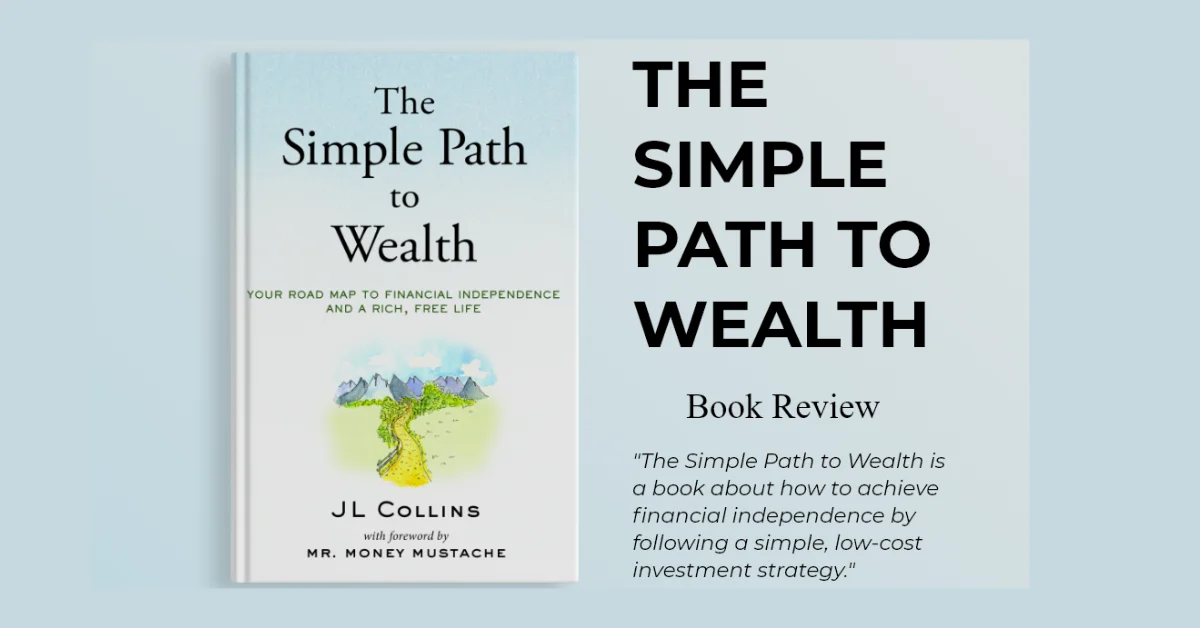
The Simple Path to Wealth is a must-read for anyone looking to achieve financial freedom. What makes this book unique is its focus on simplicity. You don’t need to be a financial expert to understand or apply the lessons here.
Key Themes in The Simple Path to Wealth:
- The Power of Financial Independence: Money buys freedom, not just things.
- Simplicity Is Key: The best financial strategies are often the simplest.
- Investing Made Easy: Focus on low-cost index funds for long-term growth.
- Avoid Debt: Debt is the biggest obstacle to building wealth.
- The Value of Patience and Discipline: Wealth-building takes time, but it’s worth it.
Breaking Down the Simple Path to Wealth
1. What Is Financial Independence?
Financial independence (FI) means having enough money to cover your living expenses without needing to work. It gives you freedom—freedom to spend time with family, pursue hobbies, or travel the world.
- Why it matters: Most people are stuck in a cycle of earning and spending. FI breaks that cycle, giving you control over your life.
- How to achieve it: Spend less than you earn, invest the difference, and let compound interest work its magic.
Actionable Tip: Calculate your FI number—the amount of money you need to live comfortably without working. A common formula is:
FI Number = Annual Expenses x 25
For example, if your annual expenses are $40,000, you’ll need $1,000,000 invested to achieve FI.
2. The Importance of Living Below Your Means
This book emphasizes that frugality is the foundation of wealth. By spending less, you’re able to save and invest more.
- Live simply: Focus on needs, not wants. For example, skip the luxury car and opt for something reliable.
- Track your spending: Use apps or a simple spreadsheet to monitor where your money goes.
Key Insight: “Spending less doesn’t mean deprivation. It means freedom.”
3. Why Investing in Index Funds Is the Best Strategy
This book champions low-cost index funds, particularly Vanguard’s VTSAX (Total Stock Market Index Fund). Here’s why:
- Low fees: High fees eat into your returns over time.
- Diversification: You’re investing in the entire market, reducing risk.
- Proven performance: Over the long term, the market tends to grow.
Actionable Tip: Set up automatic contributions to your investment accounts. Start with as little as $50 per month and increase it as you can.
4. Avoiding Debt: The Silent Wealth Killer
Debt is a major obstacle to financial independence. This book compares debt to a financial prison.
- Why avoid debt: Interest payments drain your resources and limit your ability to invest.
- Strategies to eliminate debt:
- Use the debt snowball method (pay smallest debts first).
- Consolidate high-interest debts into lower-interest loans.
Key Insight: “Every dollar spent on interest is a dollar you can’t invest.”
5. The Power of Patience and Compound Interest
Wealth-building takes time, but compound interest accelerates the process.
- Example: Investing $10,000 at an 8% return will grow to over $100,000 in 30 years without any additional contributions.
- Stay the course: Ignore market fluctuations and stay invested for the long haul.
Actionable Tip: Start investing as early as possible. Even small amounts grow significantly over time.
Key Takeaways and Actionable Advice
Automate Your Finances
- Set up automatic transfers to savings and investment accounts.
- Automate bill payments to avoid late fees.
Build an Emergency Fund
- Save 3-6 months’ worth of expenses in a high-yield savings account.
- This fund protects you from unexpected expenses like medical bills or job loss.
Focus on Your Career
- Increase your income by learning new skills or negotiating your salary.
- Use raises or bonuses to boost your savings and investments instead of upgrading your lifestyle.
Simplify Your Financial Life
- Use one or two credit cards and pay them off in full each month.
- Consolidate accounts to make tracking easier.
Final Thoughts
Remember, the path to wealth isn’t about getting rich quick. It’s about making smart, consistent choices over time. Start now, keep it simple, and watch your wealth grow.
Summary of Key Concepts
| Key Concept | Description |
|---|---|
| Spend Less Than You Earn | Live below your means and invest the surplus to build wealth. |
| Invest in Index Funds | Choose low-cost index funds for diversification and lower fees. |
| The 4% Rule | Safely withdraw 4% of your retirement savings annually. |
| F-You Money | Have enough savings to walk away from situations that don’t align with your values. |
| Wealth Accumulation Stage | Focus on saving and investing to build wealth. |
| Wealth Preservation Stage | Maintain and grow your wealth to support your lifestyle. |
| Avoid Debt | Stay away from unnecessary debt and pay off existing debts quickly. |
| Simplify Your Financial Life | Focus on what matters and avoid complex investment strategies. |
Frequently Asked Questions: The Simple Path to Wealth
What is financial independence (FI)?
Financial independence means having enough money to cover your expenses without needing to work. It gives you freedom and control over your time and choices.
How do I calculate my FI number?
To find your FI number, use this formula:
FI Number = Annual Expenses × 25
For example, if your annual expenses are $40,000, you’ll need $1,000,000 invested.
Why should I live below my means?
Spending less helps you save more. The extra savings can be invested to grow your wealth. It’s not about deprivation—it’s about choosing freedom over unnecessary expenses.
What are the best investments for beginners?
JL Collins recommends low-cost index funds, like Vanguard’s VTSAX. These funds are simple, diversified, and have lower fees than actively managed investments.
What’s so great about index funds?
- Low fees: You keep more of your money.
- Diversification: Your money is spread across the market, lowering risk.
- Long-term growth: The stock market historically grows over time.
How do I avoid debt?
Debt is like a financial anchor. To get rid of it:
- Use the debt snowball method—pay off smaller debts first to build momentum.
- Avoid high-interest loans.
Why is compound interest important?
Compound interest makes your money grow faster over time. For example, $10,000 invested at 8% grows to $100,000 in 30 years.
How can I start building wealth today?
- Live below your means: Spend less than you earn.
- Invest early and often: Start small if you need to—every dollar counts.
- Automate savings: Set up automatic transfers to investment accounts.
What is an emergency fund, and why do I need one?
An emergency fund is 3-6 months’ worth of living expenses saved in a high-yield account. It’s a safety net for unexpected expenses, like car repairs or medical bills.
How can I simplify my finances?
- Use one or two credit cards and pay them off each month.
- Consolidate your accounts to make tracking easier.
- Automate bill payments to avoid late fees.
How can I grow my income while saving?
- Learn new skills to advance your career.
- Negotiate raises or promotions.
- Use bonuses or raises to increase your savings instead of upgrading your lifestyle.
What makes this book timeless?
Its principles are simple and universal:
- Spend less.
- Invest wisely.
- Avoid debt.
- Be patient—wealth takes time to build.
What’s the biggest takeaway from this book?
Financial freedom is achievable for anyone.

Leave a Reply