
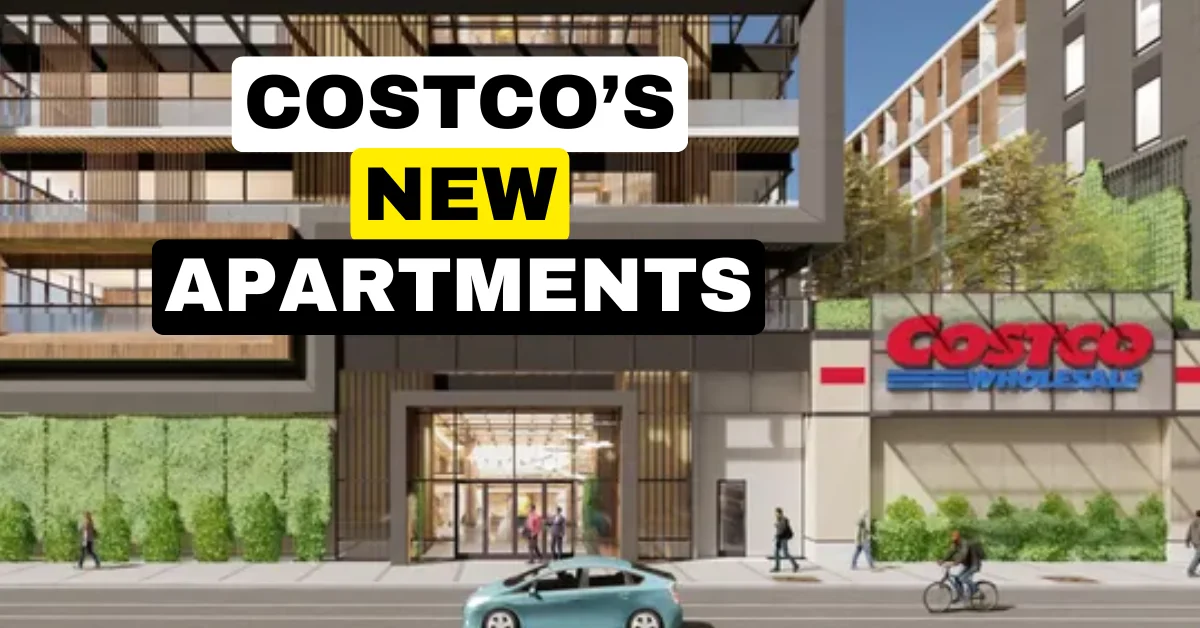
Costco is building apartment complexes above their stores. This new initiative, starting with an 800-unit development in Los Angeles, represents a new intersection of retail and residential space that could revolutionize how we think about affordable housing and mixed-use development. As cities across America grapple with housing shortages and affordability crises, this innovative approach might just provide a blueprint for the future.
Key Project Highlights:
- 800 total residential units
- 184 units designated for low-income households
- Ground-floor Costco warehouse
- Scheduled groundbreaking in early 2025
- $1,040 starting rent for qualified low-income residents

The Project: A Detailed Overview
The first development in Baldwin Village, South Los Angeles, is set to break ground in early 2025. This pioneering project, known as the 5035 Coliseum project, represents a shift in how we approach urban development and affordable housing solutions. The development will encompass 800 residential units, with 184 of these specifically designated for low-income households. What makes this project particularly remarkable is its pricing structure, with rent plus utilities starting at $1,040 for qualified low-income residents earning $41,610 annually.
The ground floor will feature a full-service Costco warehouse, spanning an area equivalent to multiple football fields. This isn’t just any ordinary Costco location – it’s been specifically designed to integrate seamlessly with the residential components above. The store will include all the traditional Costco amenities that members have come to love, including the famous food court, but it goes beyond that.
Essential Store Features:
- Comprehensive delivery services
- Full-service pharmacy
- Optical services department
- Traditional Costco food court
- Direct elevator access for residents
Amenities Redefining Urban Living
The development transcends the basic concept of housing to create an unprecedented living experience that sets new standards for mixed-use developments. The community aspects of this development have been carefully considered to foster a strong sense of neighborhood connection.
Luxury Amenities Include:
- Resort-style rooftop pool
- State-of-the-art fitness center
- Multiple interior courtyards
- Community gardens
- Full-size basketball court
- Two half-courts for additional recreation
- Climbing structures and play areas
The rooftop pool offers residents a resort-style experience with expansive lounging areas, while the state-of-the-art fitness center features modern equipment and spacious workout areas, providing residents with convenient access to health and wellness facilities. Multiple interior courtyards create intimate gathering spaces where residents can socialize and relax, and the community gardens not only promote sustainable living but also provide opportunities for residents to grow their own produce and create connections with their neighbors.
Innovative Construction Approach
The construction methodology being employed by Thrive Living represents a significant advancement in development practices. Their innovative approach combines efficiency with quality, utilizing pre-fabricated modules while maintaining high standards of construction.
Key Construction Benefits:
- Reduced construction timeline
- Lower labor costs
- Minimal community disruption
- Quality-controlled manufacturing
- Sustainable building practices
The modular construction process begins in a controlled factory environment, where individual apartment units are built to exact specifications. These units are then transported to the site and assembled with precision, significantly reducing construction time and minimizing disruption to the surrounding community. This approach not only accelerates the building process but also ensures consistent quality across all residential units.
Impact on Local Community
The development promises to transform Baldwin Village and potentially serve as a model for community renewal nationwide. The project’s influence extends far beyond just providing housing – it’s about creating a sustainable, vibrant community hub.
Community Benefits:
- Creation of 400 new permanent jobs
- Fresh food access in a former food desert
- Enhanced public transit connectivity
- Increased affordable housing options
- Improved neighborhood amenities
The introduction of a Costco store in this location addresses the critical issue of food access in what has historically been considered a food desert. Residents will have convenient access to fresh produce, quality groceries, and household essentials at competitive prices. The development’s location near public transit routes further enhances its accessibility and reduces dependency on personal vehicles.
Key Project Takeaways:
- First-of-its-kind integration of Costco with residential housing
- Innovative solution to urban housing affordability
- Creation of a complete community ecosystem
- Model for future mixed-use developments
- Potential blueprint for national expansion

Frequently Asked Questions
Questions on the Project
Q: What exactly is Costco building? A: Costco, in partnership with Thrive Living, is developing an innovative mixed-use complex in South Los Angeles that combines a ground-floor Costco warehouse with 800 residential apartments above it. This pioneering project, known as the 5035 Coliseum project, represents the first residential development in the United States with an integrated Costco store. The development combines retail convenience with residential living in a way that hasn’t been attempted before at this scale.
Q: When will construction begin? A: Construction is scheduled to begin in early 2025. The project utilizes innovative modular construction techniques that should help expedite the building process compared to traditional construction methods. The developers have already secured necessary approvals through California’s AB 2011 legislation, which helps streamline the development process for mixed-use affordable housing projects.
Q: How many housing units will be available? A: The development will feature 800 total residential units. Of these, 184 units are specifically designated as affordable housing for low-income households. This mix of market-rate and affordable units helps create a diverse, inclusive community while addressing critical housing needs in the Los Angeles area.
Questions on Affordability and Housing Details
Q: How much will rent cost? A: For qualified low-income residents earning $41,610 annually, rent plus utilities will start at $1,040 per month. Market-rate units will be priced according to local market conditions. The integration of the Costco store helps subsidize the affordable housing component, reducing reliance on government subsidies and enabling more competitive rental rates.
Q: Who qualifies for the affordable housing units? A: The 184 affordable units are designated for low-income households. Qualification is based on annual income levels, with specific thresholds set at $41,610 for certain units. Potential residents will need to go through an application process with Thrive Living, who will manage the residential component of the development.
Q: Will residents receive any special Costco benefits? A: Yes, residents will receive complimentary Costco memberships. This unique benefit provides significant value, giving residents immediate access to Costco’s competitive pricing on groceries, household items, and various services available in the store below their homes.
Questions on Amenities and Features
Q: What amenities are included in the development? A: The development offers an extensive array of amenities designed to create a comprehensive living experience. These include a resort-style rooftop pool, state-of-the-art fitness center, multiple interior courtyards, community gardens, and various recreational facilities including a full basketball court and two half courts. The property also features secure parking, climbing structures, play areas, and community gathering spaces.
Q: What services will the Costco store offer? A: The ground-floor Costco will be a full-service warehouse offering all traditional Costco amenities, including a food court, pharmacy, optical services, and comprehensive delivery services. The store has been specifically designed to integrate seamlessly with the residential component above, providing convenient access for residents while maintaining appropriate separation between retail and residential spaces.
Q: How will parking work for both residents and Costco customers? A: The development includes separate secure parking facilities for residents and retail customers. This separation ensures that residents have guaranteed access to parking while managing the flow of retail traffic efficiently. The parking design incorporates modern security features and controlled access systems to maintain resident privacy and security.
Questions on Security and Access
Q: What security measures will be in place? A: The development features comprehensive security measures including controlled access systems, 24/7 security personnel, separate residential entrances, and secure parking facilities. The design carefully separates residential and retail areas while maintaining convenient access for residents to the Costco store below.
Q: How will residential access to the Costco store work? A: Residents will have direct elevator access to the Costco store while maintaining appropriate security separation between residential and retail areas. This unique design allows for convenient shopping access while preserving resident privacy and security.
Questions on Construction and Development
Q: How is the construction being handled? A: The project utilizes innovative modular construction techniques, with pre-fabricated apartment modules that can be transported via trucks. This approach helps reduce building and labor costs while maintaining high quality standards. The construction method also minimizes disruption to the surrounding community and accelerates the overall building timeline.
Q: Why was this location chosen? A: The Baldwin Village neighborhood in South Los Angeles was selected for several strategic reasons. The area has been historically underserved in terms of fresh food access and affordable housing options. The location also offers good public transit connectivity and aligns with California’s urban development goals. Additionally, the site meets the criteria for AB 2011, which helps streamline the approval process for mixed-use affordable housing projects.
Questions on Community Impact
Q: How will this development benefit the local community? A: The project will create approximately 400 new permanent jobs and provide fresh food access in what has been considered a food desert. It also adds significant affordable housing stock to an area facing severe housing shortages. The development’s mixed-use nature promotes community interaction and provides essential services and amenities to the neighborhood.
Q: Will this impact local traffic patterns? A: The development has been designed with careful consideration of traffic flow and includes comprehensive traffic management strategies. The location’s proximity to public transit helps reduce car dependency, and the parking design helps manage retail traffic efficiently. The project’s environmental impact report addresses traffic concerns and includes mitigation measures where necessary.
Questions on Future Implications
Q: Could this model be replicated in other cities? A: Yes, this development model shows significant potential for replication in other urban areas, particularly those facing housing shortages and lacking retail amenities. The success of this project could create a blueprint for similar developments nationwide, especially in cities with supportive regulatory frameworks like California’s AB 2011.
Q: How might this change future urban development? A: This project represents a potentially transformative approach to urban development, demonstrating how retail and residential uses can be successfully integrated in dense urban areas. The model could influence future development practices, particularly in how cities approach mixed-use projects and affordable housing solutions. It also shows how private sector innovation can help address public housing needs.
Questions on Environmental and Sustainability
Q: What sustainable features are included in the development? A: The project incorporates numerous sustainable features including energy-efficient systems, water conservation measures, and waste reduction initiatives. The mixed-use nature of the development inherently promotes sustainability by reducing transportation needs and maximizing land use efficiency. The inclusion of community gardens and other green spaces further enhances the project’s environmental benefits.
Q: How does this development promote environmental responsibility? A: The vertical integration of retail and residential spaces reduces urban sprawl and promotes efficient land use. The development’s location near public transit helps reduce car dependency, and its comprehensive amenities reduce the need for residents to travel for basic services. The construction methods also emphasize sustainability through efficient material use and reduced waste.
Questions on Management and Operations
Q: Who will manage the different components of the development? A: The development will operate under a dual management structure. Thrive Living will manage the residential component, handling all apartment-related operations and amenities. Costco will independently operate the retail space, maintaining its standard operating procedures and customer service standards. This clear division ensures professional management of both aspects while maintaining appropriate separation.
Q: How will maintenance and repairs be handled? A: The development will have dedicated maintenance staff for both residential and retail components. Residential maintenance will be managed by Thrive Living’s professional property management team, ensuring prompt attention to resident needs. The Costco store will maintain its own facilities according to corporate standards. Common areas and shared infrastructure will have clearly defined maintenance responsibilities and protocols.

Leave a Reply