
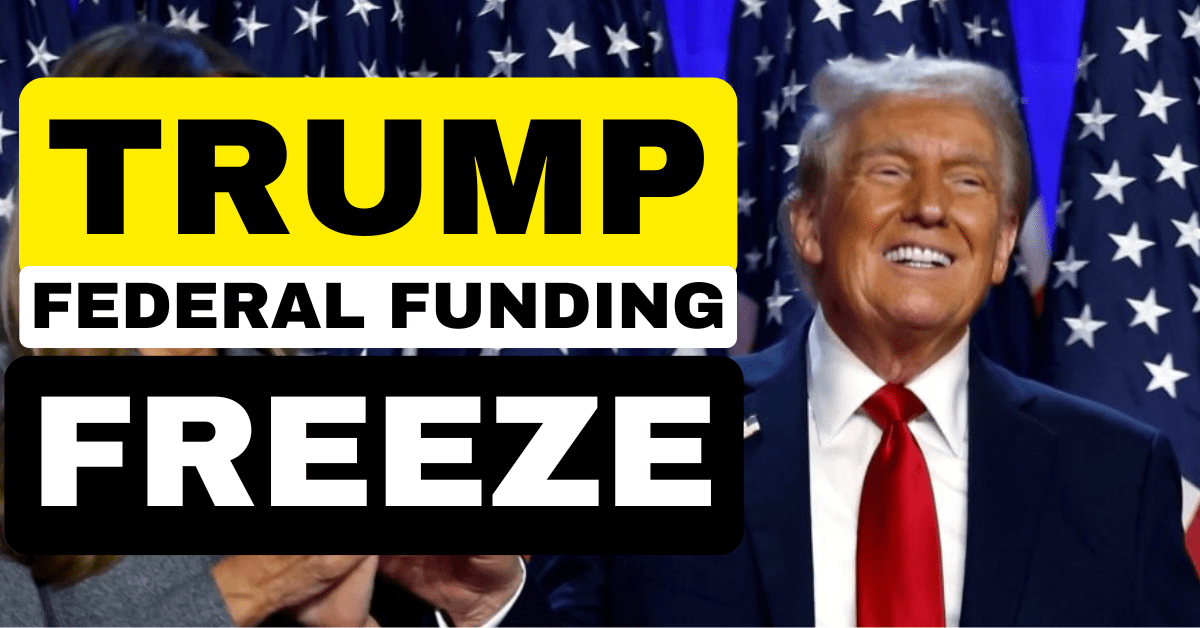
The Trump administration has issued a sweeping order to temporarily pause all federal grants, loans, and financial assistance programs.
This decision, announced through a memo from the Office of Management and Budget (OMB), is raising concerns about its impact on education, housing, healthcare, disaster relief, and more.
What Is the Federal Grants and Loans Freeze?
In a memo dated January 28, the Trump administration directed federal agencies to halt all new awards and disbursements of grants, loans, and financial aid. This freeze applies to programs across government agencies, including education, transportation, and defense.
Key Points About the Freeze:
- When It Takes Effect: The freeze begins at 5 p.m. ET on January 28, 2025.
- What’s Affected: Grants, cooperative agreements, surplus donations, loans, and interest subsidies.
- Exemptions: Assistance provided directly to individuals, such as Social Security, Medicare, and certain food assistance programs like SNAP, is not affected.
Why This Freeze Was Ordered:
The Trump administration stated that this move is meant to align federal spending with the president’s priorities. These include promoting government efficiency, ensuring safety, and eliminating programs tied to “wokeness” or diversity initiatives.
Key Areas Affected
The pause in federal funding could potentially disrupt several critical sectors:
- Education: Federal student loans and education grants may be impacted.
- Healthcare: While Medicare is exempt, other health programs might be affected.
- Housing: Housing assistance programs could face disruption.
- Disaster Relief: Aid to areas recently hit by natural disasters may be delayed.
- Research: Scientific research funding might be put on hold.
- Infrastructure: Road building and other infrastructure projects could be paused.
What Programs Are Impacted?
Federal grants and loans support a wide range of initiatives, from education and scientific research to disaster relief and housing assistance.
1. Education and Student Loans
Federal student loans and grants for education may face significant delays. This could disrupt tuition payments, financial aid, and funding for school programs. Universities that rely on federal research grants could also see projects paused or canceled.
Implications:
- Students could struggle to cover tuition costs.
- Research on critical issues like climate change, medicine, and technology could stall.
Advice:
Students and educators should explore alternative funding sources, such as private scholarships, local grants, and state-level aid programs.
2. Healthcare and Social Services
The freeze could delay funding for programs like Medicaid, community health centers, and nonprofit organizations that support vulnerable populations. Lifesaving medicines and medical supplies for foreign aid are already being withheld.
Implications:
- Families may lose access to essential healthcare services.
- Nonprofits delivering food, mental health support, or domestic violence services could face funding gaps.
Advice:
Communities can support local nonprofits through donations and volunteering. Healthcare providers may need to prioritize resources for the most critical needs.
3. Housing Assistance
Federal funding for housing assistance programs like Section 8 could be paused. This may leave families struggling to afford rent and increase homelessness rates.
Implications:
- Landlords and tenants relying on federal rent subsidies could face hardship.
- Homeless shelters and affordable housing projects may lose resources.
Advice:
Renters should contact local housing authorities for updates and explore emergency assistance programs. Landlords may consider temporary payment plans to support tenants.
4. Disaster Relief
Disaster recovery efforts funded by the Federal Emergency Management Agency (FEMA) could slow down. This could delay rebuilding projects and financial aid for areas hit by hurricanes, wildfires, and other natural disasters.
Implications:
- Communities recovering from recent disasters may face longer recovery timelines.
- Emergency preparedness initiatives could be postponed.
Advice:
State governments and local communities should prepare to address funding gaps through reserve funds and partnerships with private organizations.
How Much Money Is Affected?
Federal financial assistance accounts for a significant portion of the budget—approximately $3 trillion in fiscal year 2024. While the memo doesn’t specify the exact amount affected, the sheer scale of federal grants and loans means the freeze could have widespread consequences.
Why Is This Happening?
The administration justifies the freeze as part of its effort to reshape the federal government. The goal is to ensure that spending aligns with the president’s policy priorities, such as:
- Improving government efficiency by cutting unnecessary programs.
- Ending diversity initiatives that the administration deems wasteful.
- Focusing resources on safety and national security.
What Happens Next?
Federal agencies have until February 10, 2024, to submit detailed reports on which programs are subject to the freeze. After reviewing these reports, the administration may permanently cut funding for certain initiatives or reinstate them if deemed essential.
What Are the Long-Term Implications?
1. Economic Uncertainty
With billions of dollars in grants and loans on hold, sectors like education, healthcare, and housing could experience significant financial strain. This could slow economic growth and increase unemployment rates.
2. Nonprofit Struggles
Nonprofits often rely on federal funding to provide critical services. A prolonged freeze could force many to reduce operations or shut down entirely.
Tips for Navigating the Freeze
If you’re concerned about how this freeze might affect you, here are some steps to take:
- Stay Informed: Regularly check updates from federal agencies and local organizations.
- Explore Alternatives: Look for state and private funding options to bridge gaps.
- Advocate: Contact your representatives to express concerns and push for transparency.
- Prepare: Build an emergency fund or identify resources that can help during financial disruptions.
Final Thoughts
While the stated goal is to align spending with presidential priorities, the impacts on education, healthcare, housing, and disaster relief cannot be ignored.
Summary Table of Key Concepts
| Category | Impact | Tips |
|---|---|---|
| Education | Delayed student loans, paused research funding | Apply for private scholarships or state aid |
| Healthcare | Reduced access to services for low-income families | Support local nonprofits and clinics |
| Housing | Paused rent subsidies, increased risk of homelessness | Explore emergency assistance programs |
| Disaster Relief | Slower recovery from natural disasters | Partner with private organizations |
| Nonprofits | Funding gaps for essential services | Donate or volunteer locally |
FAQ on Trump’s Funding Freeze
What Is Trump’s Funding Freeze?
Trump‘s funding freeze is a big order to pause all federal grants, loans, and financial assistance. This means the government is hitting the brakes on giving out money for many programs. It’s a huge move that affects a lot of things, but it won’t touch Social Security or Medicare.
Why Did Trump Issue This Freeze?
Trump wants to make sure that federal spending aligns with his priorities. He’s looking to promote efficiency, end “wokeness,” and make the country safer. This memo is part of a bigger plan to reshape the government.
What Programs Are Affected by the Freeze?
The freeze affects a wide range of programs, from education to housing and disaster aid. However, it doesn’t touch programs that give money directly to individuals, like Medicare and Social Security. This means things like SNAP (food stamps), WIC, EBT, and Medicaid are on hold.
When Does the Freeze Start?
The pause starts on Tuesday, January 28, 2025, at 5 PM. Agencies have until February 10, 2025, to report on the programs affected.
Which Agencies Are Affected by the Freeze?
The memo doesn’t name specific agencies, but the OMB has the power to touch nearly every part of the executive branch. More than two dozen agencies give out grants, including big ones like the Department of Education and the Department of Transportation.
How Much Money Is Involved in the Freeze?
The memo doesn’t give a specific number, but it mentions that federal financial assistance totaled $3 trillion in fiscal year 2024. That’s a lot of money that could be affected.
What Happens Next with the Freeze?
Agencies have to pause new awards and disbursements of funds. They also need to report on the programs affected by February 10, 2025. This will give us a better idea of what’s really at stake.
How Does the Freeze Impact Education?
The freeze could disrupt education programs across the country. This includes everything from research projects to school lunches. Education is a big deal for the economy. A well-educated workforce is crucial for growth and innovation.
How Does the Freeze Impact Housing?
Housing assistance programs are also on the chopping block. This could affect things like rental assistance and housing subsidies. Housing is a key part of the economy. If people can’t afford housing, it can lead to a whole bunch of other problems, like homelessness and poverty.
How Does the Freeze Impact Disaster Aid?
Disaster aid is another big area that could be affected. This includes things like relief for natural disasters, which are becoming more common due to climate change. Disaster aid is crucial for helping communities recover. If disaster aid is disrupted, it could slow down recovery efforts.
What Does the Freeze Mean for the Economy?
How Does the Freeze Affect the Stock Market?
The stock market hates uncertainty, and this freeze creates a lot of it. Investors may be cautious until they know more about which programs will be affected and how. This could lead to volatility in the stock market, especially in sectors that rely heavily on federal funding, like education and housing.
How Does the Freeze Affect the Bond Market?
The bond market could also be affected. If the freeze leads to less government spending, it could mean fewer Treasury bonds being issued. This could lead to a decrease in bond yields, making bonds less attractive to investors. On the other hand, if the freeze leads to more government borrowing, it could mean more Treasury bonds being issued, leading to an increase in bond yields.
How Does the Freeze Affect Interest Rates?
The freeze could also affect interest rates. If the freeze leads to less government spending, it could mean less demand for borrowing, leading to lower interest rates. On the other hand, if the freeze leads to more government borrowing, it could mean more demand for borrowing, leading to higher interest rates.
What Is the Short-Term Impact of the Freeze?
In the short term, the freeze could lead to a slowdown in economic growth. This is because many of the programs affected by the freeze are designed to stimulate the economy. For example, education programs help create a skilled workforce, housing assistance programs help people afford homes, and disaster aid programs help communities recover from natural disasters.
What Is the Long-Term Impact of the Freeze?
In the long term, the freeze could have even more significant effects on the economy. For example, if education programs are disrupted, it could lead to a less skilled workforce, which could slow down economic growth. If housing assistance programs are disrupted, it could lead to more homelessness and poverty, which could also slow down economic growth. If disaster aid programs are disrupted, it could slow down recovery efforts and have long-term effects on the economy.

Leave a Reply